


VivaVideo - Video Cut & Editor
QuVideo Inc. Video Editor & Video Maker App
I first noticed VivaVideo in the kind of situation where a phone is passed around the house: one person has a clip from a birthday, another wants to add music, and someone else needs a short version for a family chat. It is a free video editing app for Android and iOS from QuVideo Inc. Video Editor & Video Maker App, and its broad toolset makes that shared-device scenario feel practical rather than demanding a computer. I would describe it as a friendly editor for quick personal videos, with enough creative depth to keep more experienced users interested.
My overall impression is positive, but not uncritical. The app is easy to start with, handles the common jobs people actually ask of a mobile editor, and includes AI-assisted tools alongside familiar trimming and text features. At the same time, the large collection of templates and optional purchases can make the interface feel busy, especially when several people use the same phone with different expectations. That matters in a household, where convenience is only half the question; the other half is knowing who is editing, whose media is being used, and which choices may affect the final video.
How VivaVideo works when a household shares one phone
A realistic example is a weekend family gathering. I might import a few short clips, remove shaky beginnings, place them in a sensible order, add captions, and export a compact video before everyone leaves. Another household member could then open the project to adjust the wording or choose a different template. This is where the app’s approachable design helps: it is built around visible editing actions rather than a complicated professional timeline that takes a long time to learn.
Related News
How CapCut Turned Mobile Video Editing Into a Race for Attention

How MX Player Dominates the Video Playback Scene

Mastering Mobile Narratives: VivaVideo's Precision Editing Power
The app belongs to the video players and editors category, although I would use it primarily as an editor. The store summary highlights AI video editing, AI templates, text-to-video, audio extraction, and automatic captions. In practice, those tools point to different levels of involvement. Someone in a hurry can start with an assisted creation, while someone who wants control can work through clips, text, sound, and timing more deliberately.
For shared use, I recommend agreeing on the purpose of the project before opening the editor. A short family greeting needs a different approach from a private travel montage or a school presentation. If everyone adds effects as they discover them, the result can become visually noisy. I get better results by choosing one visual style first, then limiting transitions and text so the people and moments remain the focus.
Related News

Why WhatsApp Messenger Still Makes Everyday Communication Feel Easy

Jurassic World: The Game Is the Better Dino Tycoon for Strategic Players

Threads in Real Life: Who Should Join, Lurk, or Leave

How SHEIN Turned Shopping Into an Endless Content Feed

How to Make Fortnite Feel Smarter on Mobile

Should You Switch to Microsoft Outlook on Mobile?
One useful workflow is to make a rough cut before touching decoration. I select the strongest clips, trim pauses, and check whether the story makes sense without music. Only then do I add captions, sound, or a template. This prevents a common mobile-editing problem: spending time polishing footage that should have been removed. It is also easier for another household member to continue the project when the basic sequence is already clear.
Audio extraction is particularly useful in a shared setting, but it deserves careful handling. If a clip contains a useful spoken message or a clean piece of ambient sound, separating the audio can help with a new edit. I would not treat that as permission to reuse any sound in every context. For family projects, it is sensible to keep the source clip and the extracted track together so nobody later wonders where the sound came from.
Starting without giving the app more authority than necessary
When I set up an editor on a shared phone, I pay attention to the first access requests and choose only what is needed for the current job. A video editor cannot do much without access to media selected for editing, but that does not mean every person using the phone should browse through every personal photo or video. I prefer selecting a small working set, completing the project, and then reviewing what remains in the app’s project area.
Gallery
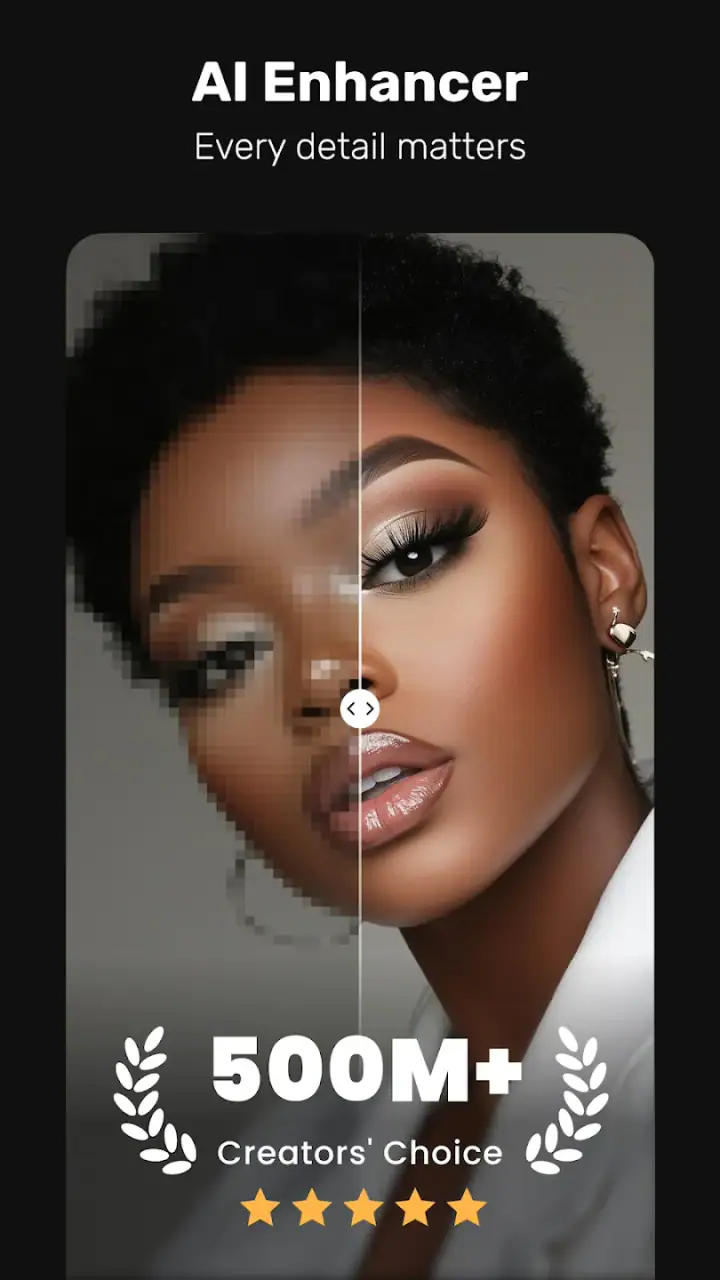
This is not a substitute for the phone owner’s privacy settings, and VivaVideo should not be treated as a family account manager. The app is an editing tool, not a system for separating household identities. If several people use one device, the practical boundary comes from the device profile, screen lock, local photo organization, and a clear agreement about which media may be opened.
That boundary becomes more important when a child borrows the phone. The content rating is Everyone, which makes the app broadly approachable in age terms, but that label does not remove the need for adult guidance around photos, recordings, publishing choices, or purchases. I would let a younger user experiment with clips that have already been selected, rather than handing over an unrestricted personal gallery.
The same principle applies to drafts. A project can contain faces, voices, locations, and private conversations even when the final video looks harmless. Before exporting or sharing, I check the whole timeline from beginning to end. Automatic captions can be convenient, but I would always read them because names, accents, background speech, and overlapping voices can be interpreted incorrectly. A caption mistake in a casual clip may be funny; in a school or family announcement, it can change the meaning.
Coordinating edits without stepping on each other’s work
VivaVideo does not replace a shared production plan, so the household has to provide its own coordination. I find it helpful to assign simple roles: one person chooses footage, another checks the wording, and a third gives approval before the final export. This avoids the familiar situation where several people keep changing the same project and nobody knows which version is the intended one.
On a shared device, I would also use a naming habit for exported files. A name that includes the occasion and the version makes it easier to distinguish a rough cut from the finished copy. This is a small detail, but it prevents accidental sharing of an unfinished edit, especially when the phone contains several similar videos from the same event.
Templates can speed up coordination because they give everyone a starting structure. They can also narrow creative choices and make different family videos look alike. My compromise is to use a template for timing or layout, then remove anything that distracts from the footage. If the template’s music or text feels too strong, a simpler manual edit usually looks more personal.
The AI features are best treated as assistants rather than final decision-makers. Text-to-video can help turn an idea into a starting point, while automatic captions can save considerable typing. I still review every generated or automated element. The more personal the material, the less comfortable I am with accepting an automated result without checking its wording, timing, and tone.
Another non-obvious advantage is that the app can reduce the gap between the person who records and the person who edits. A relative who is comfortable taking videos but not with desktop software can contribute footage, while someone else handles the arrangement on the same phone. That makes it useful for households where creative confidence is uneven. The trade-off is that the project remains tied to the device and workflow being used, so careful handoff matters.
What the editor does well in everyday projects
The strongest part of the experience is the range of tasks available without making the app feel exclusively professional. Basic trimming and arranging cover the first stage of almost any project. Text, captions, music, templates, and effects address the second stage. AI-assisted options provide shortcuts when I want a result quickly rather than a long editing session.
I especially like the idea of separating the storytelling decision from the visual decision. First I decide what the viewer should understand: who was there, what happened, and why the moment matters. Then I use text and timing to support that idea. VivaVideo gives enough tools for this approach, but it does not force me into a rigid professional workflow.
For a short household video, I would keep captions brief and place them where they do not cover faces. I would also listen with headphones before exporting if the clip includes speech. Phone speakers can hide low background noise or make music seem quieter than it really is. These checks take little time and make a noticeable difference to a video that will be watched by several people.
The app is also useful for repurposing footage. A long recording can become a short highlight, while the original audio can support a different sequence. This is more practical than simply applying an effect to the entire clip. I see VivaVideo at its best when it helps me make a clear editorial choice quickly, not when I pile on every available visual option.
Its popularity is easy to understand: the app has a 4.3 average from around 12 million ratings and has passed 500 million installs. Those figures suggest a very large audience, but they do not guarantee that every household will enjoy the same workflow. A beginner may appreciate the guided options, while a careful editor may find the abundance of choices distracting.
Where the experience becomes less comfortable
The main friction is visual and commercial clutter. A free app with many creative tools naturally has reasons to promote optional features, and the presence of in-app purchases ranging from $0.99 to $99.99 per item means I would not let a child explore payment screens casually. The app itself costs nothing to download, but “free” should be understood as an entry point rather than a promise that every creative option is included without charge.
On a shared device, I would make the owner responsible for any purchase decision and avoid treating a tap inside an editing flow as harmless experimentation. Before starting a project, it is worth deciding whether the household is willing to use only the available tools or consider an optional purchase. That conversation is more useful than discovering a locked feature after the edit is nearly finished.
Another limitation is that a large feature set can encourage over-editing. AI templates, effects, captions, and music are tempting because they produce visible changes immediately. The result can become less natural with every extra layer. I often get a better family video by limiting myself to clean cuts, one text style, and carefully chosen audio.
Compared with a basic phone gallery editor, VivaVideo offers much more room for style and sequencing. The trade-off is a busier learning curve and more decisions. Compared with a full desktop editor, it is faster to pick up and better suited to quick household projects, but it does not replace the precision and organization that serious long-form work may require. A simple social-media editor may be preferable if all I need is one trim and a filter; VivaVideo makes more sense when I want a complete short video.
I would also skip it for anyone who wants a strictly minimal interface, extensive professional color work, or a workflow built around large collaborative productions. The app is strongest in the middle: more capable than a basic built-in editor, less demanding than professional software, and convenient when the final video is meant to be finished on a phone.
Age, trust, and the final sharing decision
The Everyone age rating is reassuring for general accessibility, but age suitability is not the same as privacy readiness. A young user may understand how to add stickers or captions without understanding the consequences of showing a home, a school uniform, a vehicle plate, or another person’s face. I would supervise the sharing step even if I am comfortable letting the child handle the creative part.
For a household, trust should include a simple rule: do not publish another person’s image or voice without asking. VivaVideo can make a polished clip quickly, which increases the chance that an impulsive edit will be shared before anyone checks it. I recommend a pause after export, followed by a viewing from start to finish and a quick review of who appears, what can be heard, and where the video is going.
Account boundaries also deserve attention. I would not assume that a project created on a shared phone belongs equally to every user, or that moving between devices will preserve the same editing state. Keeping original clips in an agreed household location and marking the final export clearly makes future access less confusing. For private material, the phone owner should decide who can open the source files.
The developer is QuVideo Inc. Video Editor & Video Maker App, and the app has been available since March 21, 2013. Its current version is 9.32.3 and it requires Android 7.0 or later on Android devices. Those details matter when an older family phone is being reused: the operating-system requirement should be checked before planning a shared editing session.
My household verdict after using the full workflow
VivaVideo is a strong choice for households that want capable phone-based editing without moving immediately to desktop software. I can imagine using it for birthday recaps, holiday greetings, short school projects, travel highlights, and small personal announcements. Its combination of manual editing and assisted creation gives different users a way in, whether they prefer to work carefully or reach a presentable result quickly.
I would introduce it with boundaries rather than simply installing it and handing over the phone. Decide whose media may be used, keep purchase decisions with the device owner, review automated captions, and agree on who approves the final export. Those habits are not flaws in the app; they are sensible responses to using any powerful creative tool on a shared device.
For my own projects, the best results come from restraint: select the clips first, use AI features as starting points, check audio with headphones, and treat templates as structure rather than a finished personality. If that sounds like the kind of control you want, the app is worth trying. If you prefer a completely uncluttered editor or need professional production management, a simpler or more advanced alternative may suit you better.
Overall, I would recommend VivaVideo to a friend who wants to turn ordinary phone footage into a coherent, shareable video with minimal setup. It is free to begin, rated for Everyone, and broad enough to serve several people in one household, provided everyone understands the limits of shared-device privacy and the difference between a convenient shortcut and a final creative decision.
FAQs for VivaVideo - Video Cut & Editor
What features does VivaVideo offer for video editing?
VivaVideo provides a wide range of editing features, including trimming, merging, and rotating clips. Users can also access advanced tools like video speed adjustment, reverse playback, and multi-track editing. Additionally, the app offers numerous filters, themes, and effects to enhance your videos, making it suitable for both casual and professional editing needs.
Is VivaVideo free to use?
VivaVideo is available for free, but it offers in-app purchases and a subscription model for accessing premium features. The free version includes basic editing tools, while the paid version provides advanced functionalities, removes watermarks, and allows for higher-quality exports. Users can choose the plan that best fits their needs and budget.
Does VivaVideo support all video formats?
VivaVideo supports a wide array of video formats, including MP4, AVI, and MOV, which are commonly used in mobile devices. However, for the best performance, it is recommended to use standard formats that are widely compatible. Users may need to convert certain video files if compatibility issues arise.
How user-friendly is VivaVideo for beginners?
VivaVideo is designed to be user-friendly, with an intuitive interface that simplifies the editing process for beginners. It offers tutorials and tips to guide new users through basic editing tasks. The app’s layout is straightforward, allowing users to easily navigate between features without feeling overwhelmed.
Can I share videos directly from VivaVideo?
Yes, VivaVideo allows users to share their edited videos directly to social media platforms such as YouTube, Instagram, and Facebook. The app includes integrated sharing options that simplify the process, ensuring your creations can be easily showcased to your audience without needing to export and upload them separately.
Pros
- Easy-to-use interface for beginners.
- Wide range of editing tools available.
- Offers high-quality export options.
- Rich library of effects and transitions.
- Supports direct sharing to social media.
Cons
- Contains in-app advertisements.
- Some features require a subscription.
- Limited free version capabilities.
- Occasional app stability issues.
- Large file size may affect storage.


